
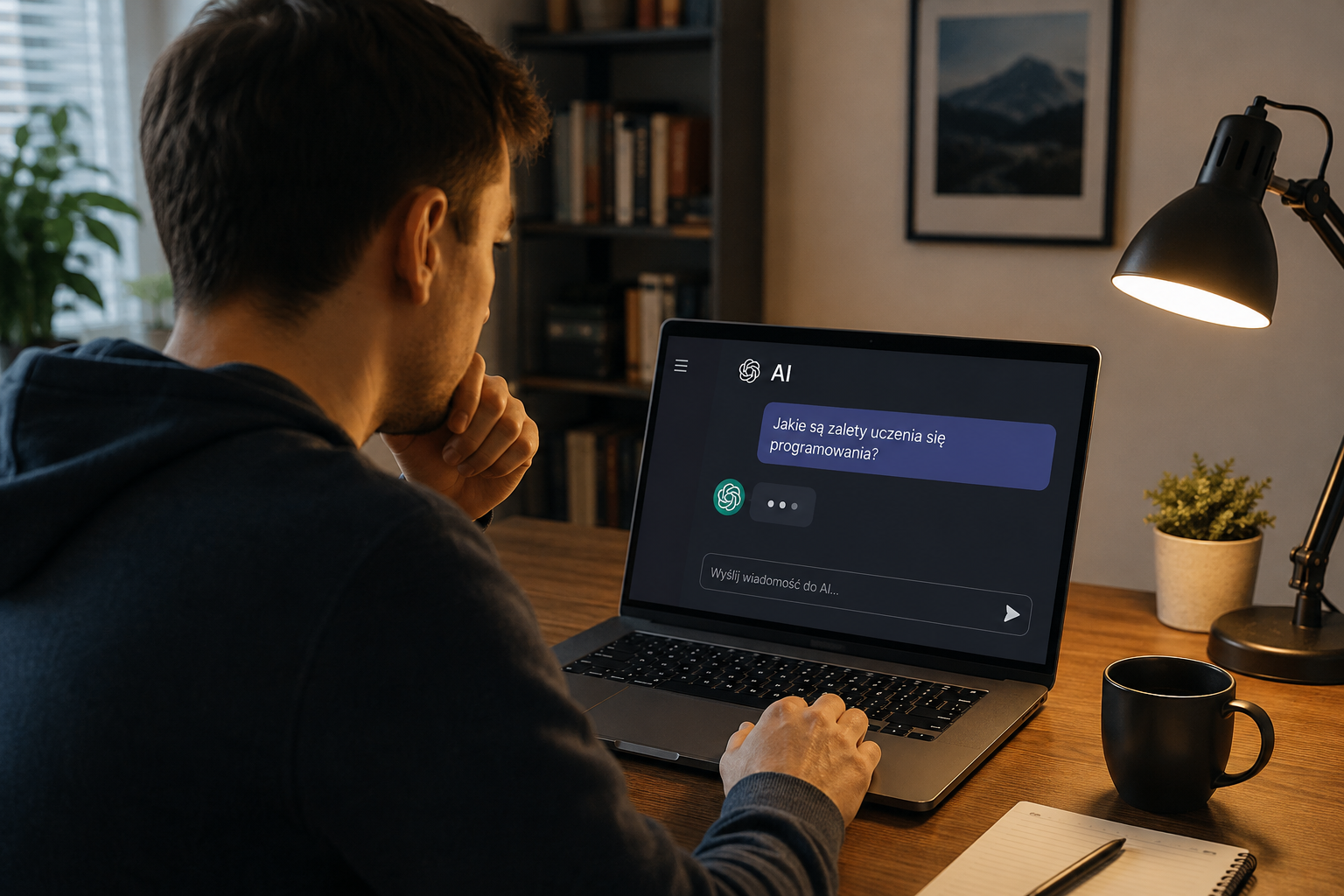
In this new article you’ll learn how to deal with AI anxiety.
If a headline about artificial intelligence has left you feeling vaguely sick lately, you’re in good company. Monday, AI is going to cure diseases. Tuesday, it’s coming for your job. By Wednesday, nobody will ever know what’s real again. Of course people are on edge.
The unease is common, and it’s measurable. In a June 2025 Pew survey, half of American adults said the growing use of AI in daily life makes them more concerned than excited. Just 10% said they were more excited than concerned. When Pew first asked in 2021, the number who were more concerned was 37%. So no, you’re not being dramatic.
The global picture is a little less gloomy. Across the countries Pew surveyed, the median was 34% more concerned than excited and 42% equally concerned and excited. The most common feeling isn’t dread. It’s mixed feelings, which seems like a fair reaction to something this big.
My argument in this post is simple: AI is a tool, and how we use it is up to us. That doesn’t make every worry silly. It does mean you have more say than it feels like at 11pm with a doomy article open on your phone. Here are nine ways to get some of your calm back.
How to Deal With AI Anxiety:
1. Name your fear
Before you try to fix anything, work out what you’re actually afraid of. “AI is overwhelming” is a fog. “My job might be automated,” “my kids will see fake videos,” and “I don’t want my photos used without asking” are specific, and specific things can be dealt with.
Write them down on paper. Next to each one, mark whether you can do anything about it. Some will turn out to be practical problems: privacy settings, a skill to learn. Others are huge, society-sized questions you can’t solve alone, and you’re allowed to put those down for a while.
A fear that’s written down is easier to handle than one swirling around in your head.
2. Remember it’s a tool
A hammer builds a house or breaks a window. A camera takes a family portrait or gets used to spy on someone. Nobody says the calculator decided to put accountants out of work.
AI is far more complicated than a hammer, but the basic point holds. It doesn’t want anything. It works from the data it was trained on and the instructions it gets, and what happens next depends on people: the companies building it, the lawmakers regulating it, and the rest of us using it. The EU’s AI Act, for example, already sets rules for higher-risk systems, and other countries are working on their own. Whether those rules are good enough is a fair debate. The point is that nobody has agreed to just let it happen.
Next time your brain says “AI is going to do X,” try swapping in “people will decide how AI is used for X.” It sounds like a small edit. It changes how the thought feels.
3. Fix your information diet
Much of AI anxiety comes less from the technology than from how we read about it. Headlines are built to grab attention, and fear works better than almost anything. “AI will wipe out millions of jobs!” gets more clicks than “The job market is changing and nobody knows by how much.”
Misinformation worries play a part too. Pew found that 76% of Americans say it matters a lot to be able to tell whether something was made by AI or by a person, but 53% aren’t confident they could. No wonder people feel uneasy. A few habits can help:
- Read AI news at one set time of day, and not right before bed.
- Check who made the prediction. A company selling AI products has different incentives from an independent research group.
- Look for sources that talk about the limits of the technology as well as the risks.
- When a scary headline lands, ask what it changes for you this week.
This isn’t burying your head in the sand. You can stay informed without living on high alert.
4. Try it yourself for twenty minutes
Fear does well where understanding is thin. The easiest way to shrink something that worries you is to look at it up close, when nothing is at stake.
Open an AI tool and give it a low-stakes job. Ask for dinner ideas based on what’s in your fridge. Ask for a rough plan for a weekend away. Ask it to explain something you’ve never quite understood.
I’d bet you notice two things. It can be properly useful. It can also be confidently wrong, miss obvious context, and need you to steer it. The second discovery is the one I find most reassuring, because it shows how much the tool still needs a person.
5. Control what you can: privacy and security
A lot of AI worry comes down to data. Who has it, what they do with it, whether it could be misused. This is the part where you can do something concrete.
- Don’t paste sensitive information into AI tools: ID numbers, medical records, passwords, confidential work documents.
- Check the privacy settings in the apps you use to see whether your chats are used to train models. Many let you opt out.
- Turn on two-factor authentication for important accounts and use a password manager.
- Be suspicious of urgent or emotional messages and recordings. If something is pushing you to act right now, stop and check through another channel.
An afternoon of setup cuts your risk. It also takes a surprising amount of background stress off, because you’ve done something real.
6. Build what’s distinctly human
Fear of losing your job is probably the most common form of AI anxiety, and it isn’t baseless. Pew reports that more than half of US workers expect AI to cause significant job losses over the next 20 years. It helps to look at the bigger numbers with a cool head.
The World Economic Forum’s Future of Jobs Report 2025 projects 170 million new jobs by 2030 and 92 million displaced, a net gain of 78 million. That’s a forecast, not a promise, and the shifts will be uneven. The same report expects roles like cashiers and administrative assistants to shrink, and it estimates that almost 40% of the skills needed for future jobs will be different from today’s. So this isn’t “nothing to see here.” But it does suggest that “everything disappears” is only one possible outcome, and probably not the likeliest.
History leans the same way. New tools usually change jobs more than they erase them. Spreadsheets didn’t get rid of accountants. They changed what accountants spend their days on.
So put your effort into the things people are still better at: judgment when things are unclear, empathy, communication, creativity, critical thinking. And learn how AI applies to your own field. Someone who uses it sensibly is better placed than someone pretending it isn’t there.
7. Talk to real people
Anxiety gets smaller when you say it out loud. Tell a friend, your partner, or a coworker how you feel and ask how they see it. You’ll probably find someone with the same worries, and someone else with practical tricks.
It also helps to know how widespread the mood is, even among the people using AI the most. A 2026 Gallup survey found that Gen Z still uses AI more than older generations, but the share who said they felt excited about it fell from 36% to 22% in a year. Using something constantly and feeling uneasy about it can go together.
If you have kids, talk to them too. Banning things rarely works. It’s better to teach them how to check information, how to spot fake content, and why it’s worth thinking a problem through before asking a machine.
8. Set your own rules
If it’s up to us how the tool gets used, decide what that means for you. You don’t have to use AI for everything. You don’t have to avoid it either.
Pew’s survey hints at a useful way to draw lines. About half of Americans think AI will make people’s creative thinking and relationships worse, but people are far more comfortable with it doing data-heavy jobs like weather forecasting. You can borrow that logic. A few rules you might adopt:
- Use AI for dull, repetitive jobs like summaries, notes, and first drafts of emails, so you have more time for things you like.
- Don’t hand over decisions that depend on your values: hard conversations, judgments about other people, big life choices.
- Check facts before you repeat them or act on them.
- Keep some tech-free time, like a screen-free evening or a hobby you only do by hand.
Rules like these give you a sense of agency. You decide, and the tool helps, which is the right way round.
9. Know when to ask for support
Sometimes worry about the future, including the technological one, goes past ordinary concern and starts interfering with daily life. If thoughts about AI are keeping you awake, wrecking your appetite, setting off panic, keeping you tense all the time, or flattening things you normally enjoy, it’s worth talking to a therapist, counselor, or your doctor.
There’s nothing embarrassing in that. Change is fast right now, and nervous systems don’t always keep up. Getting help is a way of looking after yourself.
Last thing
AI is one of the most important tools of our time, and like any powerful tool it brings real opportunities and real risks. It’s good that we’re arguing about both. Fear is a poor advisor, though. Curiosity, some knowledge, and a few deliberate choices will serve you better.
The future with AI isn’t something that simply lands on us. People shape it: those who build the technology, those who regulate it, and everyone who decides each day how to use it and where to stop.
So pick one thing from this list and do it today. Change one privacy setting, spend your twenty minutes testing a tool, or call the friend you’ve been meaning to talk to. One small step is enough to remind you that you’re still the one in charge.