
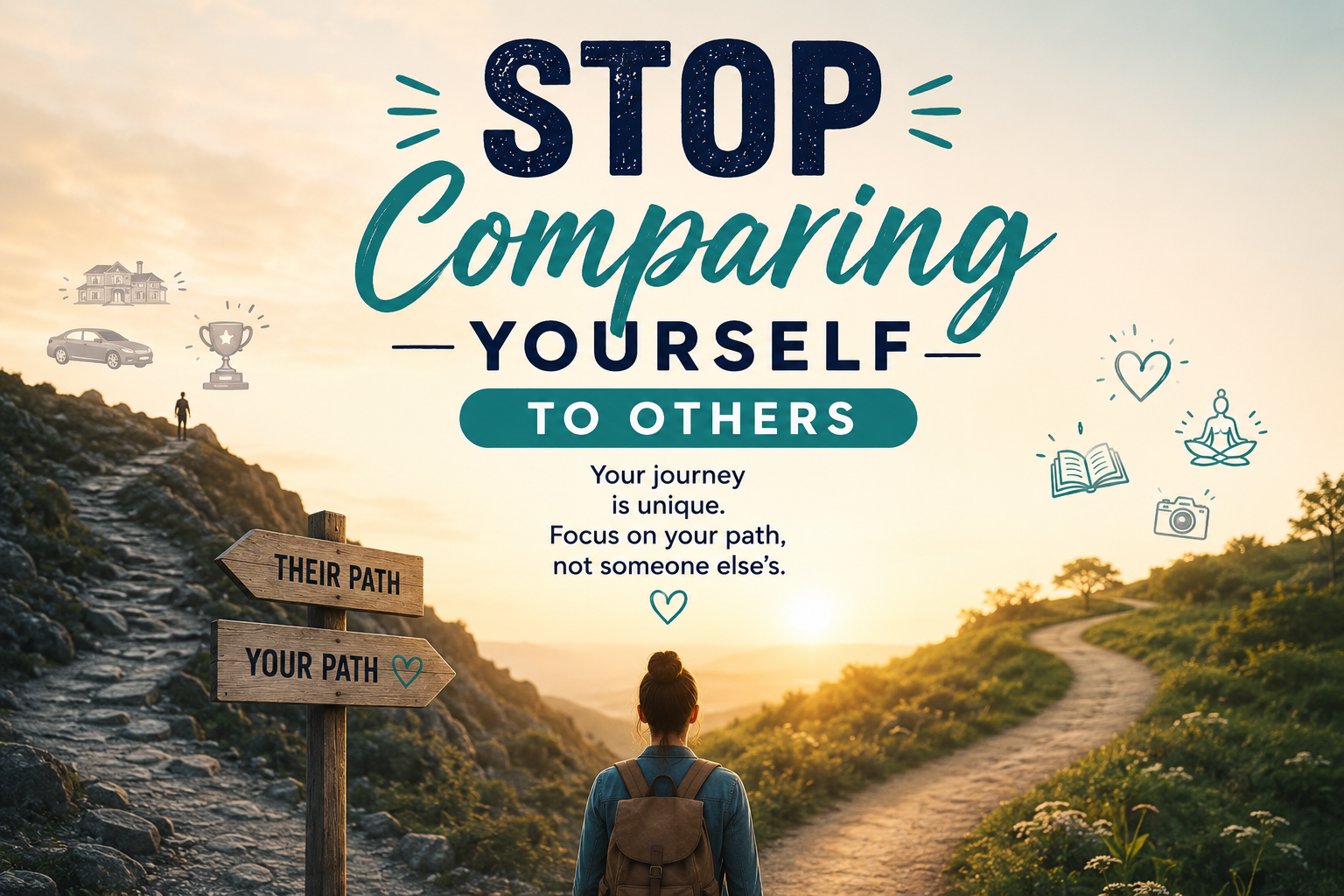
If you want to know how to stop comparing yourself to others, you’ll love this article.
Constant comparison has become almost automatic. Open any social media app for five minutes and you’re instantly pulled into a flood of polished vacations, career wins, gym selfies, expensive purchases, engagement photos, and perfectly filtered lives. It’s exhausting. And subtle, too. Most people don’t even notice how quickly a casual scroll turns into self-criticism.
Still, someone else’s highlight reel is not a measurement of your worth, your progress, or the quality of your life. Learning how to stop comparing yourself to others starts with recognizing what fuels the habit—and slowly reclaiming your attention before it drains your confidence.
How To Stop Comparing Yourself To Others:
1. Figure Out What Triggers the Comparison Spiral
Comparison rarely appears out of nowhere. Usually, something sparks it. Maybe it’s luxury content online, a certain coworker, fitness influencers, or conversations that leave you feeling “behind” in life. Start paying attention to the exact moments when your mood shifts.
The more aware you become of those triggers, the easier it is to limit their influence.
Write your thoughts down as they happen. Not to judge yourself—but to spot patterns. Maybe you notice that after scrolling through expensive lifestyle content, you suddenly feel dissatisfied with your own achievements. Or perhaps one particular person consistently makes you question your value.
Awareness changes behavior. Quietly. Gradually.
It’s also worth examining your self-esteem honestly. Do other people’s opinions control your mood more than they should? Do you constantly seek validation before feeling good about yourself? If so, the comparison problem may actually be rooted in confidence, not social media.
2. Stop Ignoring Your Own Strengths
People who constantly compare themselves to others tend to do something interesting: they magnify everyone else’s strengths while minimizing their own.
You might admire someone’s confidence, appearance, talent, or success while completely overlooking the qualities that make you valuable. That imbalance creates insecurity.
Start correcting it.
Make a list of your strengths—even the ones that seem ordinary. Maybe you’re emotionally reliable. Maybe you stay calm under pressure. Maybe you make people feel understood. Those things matter more than you think.
And don’t just create the list once and forget it exists.
Put reminders where you’ll actually see them: your mirror, your notes app, your desk, your lock screen. When self-doubt shows up, challenge it directly.
“I’m creative.”
“I’m disciplined.”
“I’m improving.”
“I’m someone people can trust.”
Simple statements can interrupt destructive thinking patterns surprisingly fast.
If identifying your strengths feels difficult, ask someone close to you. Other people often notice qualities in us that we’ve completely normalized.
3. Keep a Gratitude Journal That Goes Beyond Surface-Level Positivity
Gratitude sounds cliché until you practice it consistently.
Most people rush through it. They write things like “family,” “health,” or “friends” without really thinking about why those things matter. The real shift happens when you become specific.
Instead of writing:
“I’m grateful for running.”
Try:
“Running clears my mind after stressful workdays and reminds me that my body is capable of more than I give it credit for.”
That level of reflection changes your focus. It pulls your attention away from what other people have and reconnects you with what already exists in your own life.
You also begin noticing smaller moments: unexpected kindness, peaceful mornings, genuine conversations, laughter during difficult days. Things that don’t look impressive online—but actually make life meaningful.
Even one journal entry a week can reshape your mindset over time.
4. Learn to Admire Without Feeling Inferior
Someone else succeeding does not automatically mean you’re failing.
That’s an important distinction.
When you see highly motivated, disciplined, or successful people, your instinct may be to feel intimidated. But envy can be transformed into inspiration if you approach it differently.
For example, seeing athletes in incredible shape could trigger insecurity—or motivation. You could use that discomfort as evidence of what you want to improve instead of proof that you’re inadequate.
The same applies to career success, creativity, relationships, or personal growth.
Admiration becomes healthy when it pushes you forward instead of making you feel smaller.
5. Focus on Progress Instead of Perfection
Perfection is a moving target. Nobody reaches it because it doesn’t actually exist.
Maybe your communication skills need work. Maybe you want to become stronger, more disciplined, more educated, or emotionally resilient. Good. That means you have direction.
Take classes. Read more. Ask questions. Practice consistently. Build competence little by little instead of obsessing over where other people already are.
Confidence grows through evidence. And evidence comes from effort.
The moment you start actively improving your own life, comparison loses some of its power.
6. Compete With the Person You Were Yesterday
Comparison becomes destructive when your standards depend entirely on other people’s lives.
A healthier approach? Measure yourself against your past self.
Track your own progress. Notice your own growth.
If you’re training for a marathon, focus on whether you can run farther this month than you could last month. If you’re improving your finances, look at your own habits instead of someone else’s income. If you’re working on confidence, recognize situations you now handle better than before.
Personal growth becomes far more satisfying when it’s internal rather than performative.
7. Stop Judging Your Journey Against Someone Else’s Timeline
People reach milestones under completely different circumstances.
One person may graduate earlier because they had financial support. Another may take longer because they work full-time, care for family members, or deal with challenges nobody else sees.
Context matters.
You are not failing because your path looks different.
Social media creates the illusion that life follows a universal timeline: success by this age, marriage by that age, financial stability immediately, endless productivity every day. Real life is messier than that. More individual. More unpredictable.
And honestly? That’s normal.
8. Reduce Social Media Consumption If It’s Damaging Your Mental State
Not all social media is toxic. But constant exposure to curated lifestyles can distort your perception of reality.
If certain apps leave you feeling inadequate every single time you open them, create distance.
Mute accounts.
Unfollow people who trigger insecurity.
Set screen-time limits.
Take short breaks from scrolling entirely.
The goal isn’t isolation. It’s protecting your mental environment.
Most people don’t realize how dramatically their mood improves when they stop consuming endless comparison-based content all day long.
9. Avoid Media That Constantly Sells Unrealistic Standards
Highly edited bodies. Perfect relationships. Luxury lifestyles. Endless success.
Modern media thrives on aspiration because aspiration keeps people watching.
But repeated exposure to unrealistic standards quietly affects self-image. You start believing everyone else is happier, more attractive, more successful, more fulfilled.
They aren’t.
You are seeing carefully selected moments—not entire lives.
Limiting exposure to unrealistic content isn’t weakness. It’s self-awareness.
10. Curate Your Feed Intentionally
Your online environment influences your mindset more than you think.
Instead of filling your feed with content that creates anxiety or FOMO, follow accounts that educate, motivate, or genuinely improve your thinking.
Fitness pages that teach discipline.
Psychology content that builds self-awareness.
Creative communities that inspire action.
People who encourage growth instead of shallow validation.
Social media becomes healthier when you use it as a tool rather than passive entertainment.
11. Treat Yourself With More Compassion
A lot of people speak to themselves in ways they would never speak to someone they love.
One mistake—and they spiral.
One insecurity—and they attack themselves mentally for hours.
That approach destroys confidence over time.
Self-compassion doesn’t mean avoiding accountability. It means recognizing that being imperfect is part of being human.
Take care of your body. Sleep properly. Move regularly. Eat decent food. Rest when needed. Encourage yourself during difficult moments instead of becoming your own enemy.
You’ll perform better when you stop operating from constant self-hatred.
12. Talk About What You’re Feeling
Comparison becomes heavier when you keep it trapped inside your own head.
Talking to someone you trust can immediately reduce its intensity. Often, you’ll discover they struggle with the exact same thoughts.
That’s the strange thing about insecurity: people assume they’re alone in it while almost everyone quietly experiences it.
Conversation creates perspective.
13. Become Your Own Coach
Imagine treating yourself like someone you genuinely wanted to help succeed.
You’d encourage progress. Push for growth. Celebrate effort. Correct mistakes without cruelty. You wouldn’t expect perfection overnight.
That mindset changes everything.
Support yourself—but challenge yourself too. Set goals that force growth without making your entire self-worth dependent on outcomes.
Even failed attempts build experience.
14. Replace Destructive Thoughts Before They Take Over
Comparison often begins with a single thought.
“They’re better than me.”
“I’ll never look like that.”
“I’m behind.”
If left unchecked, those thoughts snowball quickly.
Interrupt them early.
Instead of:
“She’s more talented than I am.”
Try:
“She’s skilled in that area, and I can improve my own abilities too.”
That shift sounds small, but it changes the emotional direction completely.
And if your mind keeps spiraling? Step away. Go outside. Exercise. Listen to music. Reset your attention before negativity gains momentum.
15. Remember That Online Perfection Is Usually an Illusion
Most people share victories, not struggles.
You see the engagement photo—not the years of loneliness before it.
The business success—not the debt, stress, or failed attempts.
The fitness transformation—not the insecurity that motivated it.
When you remember that every person has invisible problems, jealousy loses intensity and empathy grows stronger.
Nobody’s life is as flawless as it appears online.
16. Take Ownership of Your Own Life
At some point, comparison becomes a distraction from responsibility.
Because while you can’t control other people’s advantages, opportunities, or outcomes—you can influence your own decisions.
Your habits.
Your mindset.
Your discipline.
Your environment.
Your direction.
The more focused you become on building your own life, the less energy you waste obsessing over someone else’s.
And eventually, something interesting happens.
You stop asking, “Why am I not like them?”
And start asking, “Who do I want to become?”
Summary:
Constantly comparing yourself to other people can quietly damage your confidence, happiness, and sense of direction. Social media, unrealistic expectations, and outside pressure make it easy to feel like you’re falling behind, even when you’re making progress in your own life. The key to breaking this habit is learning to shift your focus inward instead of measuring your worth against someone else’s achievements.
The first step is identifying your triggers. Pay attention to the people, situations, or types of content that leave you feeling insecure or dissatisfied. Once you recognize what sparks comparison, you can reduce your exposure to it and protect your mindset more intentionally.
It’s also important to stop ignoring your own strengths. Many people focus so heavily on what others do well that they completely overlook their own abilities, personality traits, and progress. Writing down your positive qualities, achievements, and personal growth can help rebuild self-confidence and create a healthier self-image.
Practicing gratitude is another powerful way to shift your perspective. Instead of obsessing over what you lack, focus on what already adds value to your life. Appreciating your health, relationships, opportunities, and small daily moments can reduce envy and help you feel more grounded.
Rather than envying successful people, learn to admire them without feeling inferior. Use their success as inspiration instead of proof that you are not enough. Someone else doing well does not take away your ability to improve your own life.
Personal growth becomes much healthier when you compete only with yourself. Focus on becoming better than you were yesterday instead of trying to match someone else’s timeline, appearance, income, or achievements. Everyone’s circumstances are different, and comparing journeys rarely makes sense because no two lives are built under the same conditions.
Reducing social media consumption can also make a major difference. Most online content shows carefully selected highlights rather than reality, which creates unrealistic standards. Curating your feed with educational, motivational, or genuinely positive content helps create a healthier mental environment.
Self-kindness matters too. People often speak to themselves more harshly than they would ever speak to a friend. Replacing negative thoughts with realistic and encouraging ones can slowly change the way you view yourself.
At the end of the day, the best way to stop comparing yourself to others is to take ownership of your own life. Focus on your habits, your goals, your progress, and your happiness. The more energy you invest in building your own future, the less time you spend worrying about someone else’s.